Exposure is more than a warmth label
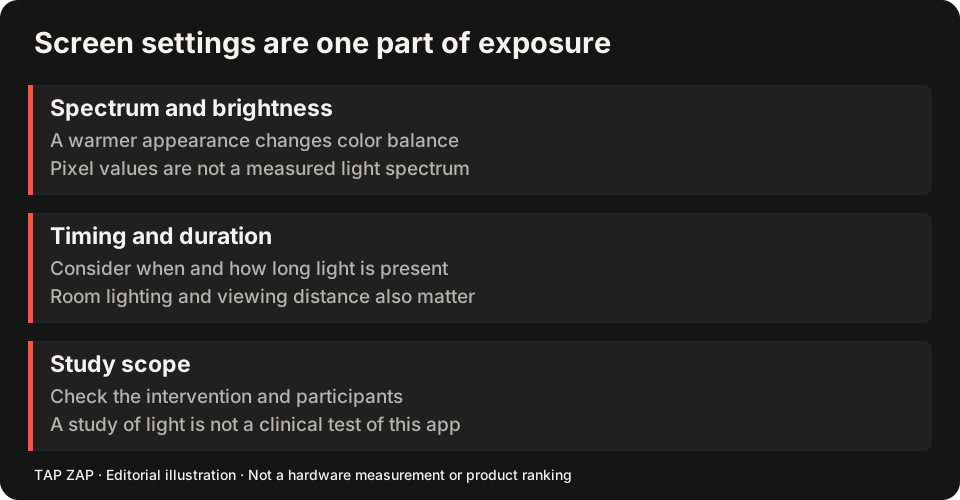
Timing, duration, intensity, spectrum and the surrounding lighting environment all matter when discussing light exposure. A software warmth slider describes a requested appearance change; it does not supply a spectral measurement at the eye or predict an individual sleep outcome.
A warmer or darker image may be a useful user control. That capability is separate from proving a clinical effect. Room lighting, viewing distance, content and session length also remain part of the conditions.
Read the cited intervention before borrowing its result
The Chang and colleagues evening e-reader study compared a light-emitting e-reader with printed reading under controlled conditions. It reported differences in melatonin/circadian timing, sleep latency and next-morning alertness. It did not test Tap Zap or establish a benefit from installing a particular screen-filter app.
| Study component | What was tested | Limit when discussing a filter |
|---|---|---|
| Participants/design | 12 healthy young adults; randomized crossover inpatient protocol. | Not a population-wide estimate or a test in shift workers. |
| Exposure | About 4 hours before bed, five evenings per condition. | Not equivalent to every short evening screen session. |
| Device/comparator | Maximum-brightness light-emitting e-reader versus printed reading in very dim room light. | The study did not isolate a warm-filter intervention. |
| Interpretation | Circadian/sleep-related measures differed in this protocol. | Cannot transfer the results into a Tap Zap percentage or guaranteed individual outcome. |
The paper also notes that no longer-wavelength light-emitting comparator was included, limiting separation of irradiance from spectral composition. Its device and reading conditions matter. Product copy should not take one result and attach it to an unrelated slider.
What an app-specific claim would need
An app improving sleep would need relevant evidence about the intervention and usage conditions, with suitable outcomes and controls. A screenshot, RGB value, color-temperature estimate or successful API write is not that evidence. Research on spectacles, room lighting and screen settings addresses different interventions and cannot be substituted without justification.
Tap Zap has not established a clinical outcome here, and this article is an editorial explanation rather than an independent medical review. No medical reviewer or research credential is implied by organization authorship.
Choose controls for the task they actually perform
Night Shift, Night light, f.lux, Iris and Tap Zap provide appearance controls with different workflows. Use the night-mode limitations guide to separate warmth, brightness and hardware modulation, then the Mac or Windows guide to choose a tool. For rotating work hours, the schedule guide explains timing controls without prescribing biological timing.
For ordinary use, choose readable settings in the actual room and keep a clear off-state for color-sensitive work. A software purchase is not a treatment for persistent sleep or vision symptoms.
About this guide
Written by Tap Zap. We make the software discussed here. Updated 10 October 2026 to distinguish product behavior from display-specific measurements and health outcomes. The linked documentation and studies explain the scope of these claims. Read our editorial policy, evidence limits and corrections process.
Compare screen controls · All guides · Downloads and compatibility